Hiring is a process that is too often, it’s treated like a reaction. A position opens, and suddenly everyone’s scrambling to get candidates in the door. That kind of reactive approach not only wastes time, but it also wastes potential.
If you’ve read my posts on Talent Strategy and Talent Acquisition Strategy, you know I see hiring as a long game. And if you’re going to play it well, you need a system that’s predictable, measurable, and built to scale. This is system is what is called a recruitment funnel.
This post will show you what a recruitment funnel is and why it is so important to your organization’s talent acquisition strategy.

What Is a Recruitment Funnel?
A recruitment funnel is similar to a pipeline but when done correctly, it is smarter.
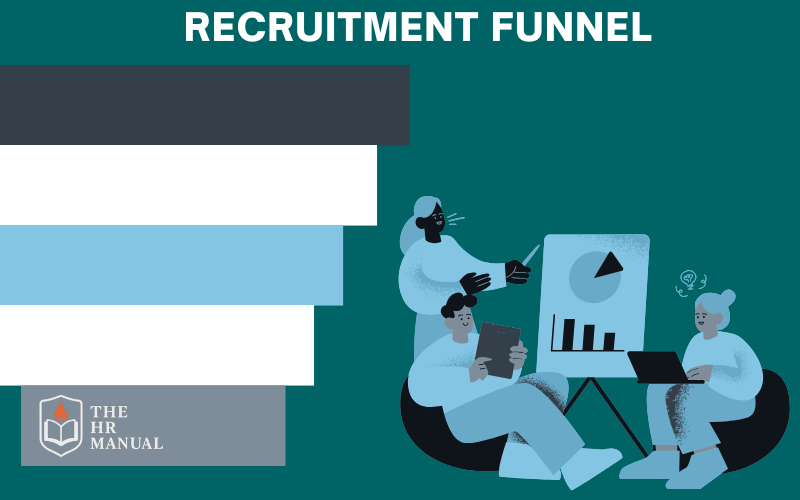
A recruitment funnel is a framework that shows the candidate’s journey from first connection to hire. Talent acquisition teams can use this funnel to identify where candidates are falling off and what stages of the hiring process are working, and which are underperforming.
The standard recruitment funnel looks like this but can be manipulated to your organization’s needs:
Here’s what a standard recruitment funnel typically looks like:
- Awareness: This is where a candidate is learning about your company through employer branding and ads that are posted.
- Interest: A candidate is now looking at your website and following you on LinkedIn.
- Application: They apply (hopefully easily) through your ATS.
- Selection: Screening, assessments, interviews—your decision-making process kicks in.
- Offer: You present terms, negotiate, and hold your breath.
- Hire: Offer accepted. Welcome email sent. Onboarding begins.
Each stage filters candidates closer to the goal: finding the right person for the right role.
Why the Funnel Still Matters (and Always Will)
There’s a reason smart TA leaders swear by the funnel. It turns guesswork into insight and activity into strategy.
Here’s what a strong recruitment funnel gives you:
- Visibility: You know exactly where candidates are dropping off.
- Control: You can target specific stages for improvement.
- Efficiency: You shorten your time to fill and reduce cost per hire.
- Alignment: You match your funnel to your workforce planning model and headcount strategy.
When trying to scale or improve your metrics this model becomes extremely important. Creating an efficient recruitment funnel will lead to a more fleshed out talent acquisition strategy and a greater recruitment ROI.

A Funnel to Fit Your Organization
Having a funnel for hiring 2-3 software engineers is not going to work the same as scaling a 200-person customer support team
The question is: How do you tailor the model?
- Start with your hiring goals
- Are you solving for speed, cost, or quality?
- Are you growing aggressively or backfilling?
- What roles are business-critical?
- Map your funnel stages accordingly
- Add or remove steps depending on your process.
- Include “sourcing” if your team does outbound recruiting.
- Consider a “talent nurture” stage for pipelines that need warming.
- Set metrics that actually matter
- Don’t track everything. Track what drives decision-making.
- For example, track “application-to-interview” if you’re focused on candidate quality. Track “sourcing-to-application” if your pipeline is weak up top.
This is how you move from a general funnel to a recruitment funnel strategy that fits your hiring reality.
Metrics That Make the Funnel Work
The recruitment funnel can only be a success if you have data to back it up showing how efficient it is. Here are a few ways to measure what is most significant at each stage:
Awareness: These tell you how well you’re showing up on candidates’ radar before they even apply.
- Employer brand impressions: How many eyeballs are landing on your brand. It’s brand awareness 101.
- Social engagement: Are people actually interacting with your posts with likes, shares, comments?
- Ad click-through rate: Out of everyone who saw the ad, how many cared enough to click? Low CTR = wrong message or wrong audience.
Interest: Now that they’ve seen you, do they care enough to explore? These metrics show early-stage intent.
- Career page visits: Basic but telling. Are candidates checking you out?
- Time spent on job pages: Are they skimming or actually reading? Longer time = higher interest.
- Talent community signups: They’re not ready to apply yet, but they’re raising their hand. Don’t ignore this group.
Application: Here’s where friction kills conversion. These metrics show whether your apply process is helping or hurting you.
- Start-to-completion rate: Brutal but necessary. How many start applying vs. how many finish? Drop-off here is a red flag.
- Quality of application score: Are the resumes coming in even close to what you need? If not, the issue is likely upstream.
- Source of applicant: Where are your best people coming from? Job board, referral, LinkedIn? Double down on what works.
Selection: The evaluation stage. These metrics help you gauge how efficient and fair your screening is.
- Interview-to-offer ratio: Are you interviewing five people for every offer or fifty? Lower is usually better.
- Time in stage: How long does each round take? Bottlenecks here frustrate both sides.
- Candidate satisfaction (NPS): Would they recommend your process to others? If not, fix it fast.
Offer: You’re almost there. Now it’s about sealing the deal.
- Offer acceptance rate: Are candidates saying yes? If not, your comp, timing, or messaging might be off.
- Negotiation time: Longer isn’t always bad, but if it’s dragging, it could signal disconnects in expectations.
- Decline reason tracking: This one’s gold. Capture whycandidates are saying no. Then actually use that data.
Hire: They’ve accepted. But are they performing? These metrics measure the true success of your funnel.
- Time to productivity: How long until the new hire is actually adding value? Shorter = better onboarding and better hiring match.
- Hiring manager satisfaction: Did the manager get what they needed? This one’s often skipped, but it’s critical.
- Quality of hire (measured 90 days in): The gold standard. Are they meeting performance expectations? If not, trace it back through the funnel.
- These metrics aren’t just nice-to-haves, they’re your early warning system. If a metric tanks, it tells you exactly where to look.

How Tech Supports a Smarter Funnel
You can’t run a modern funnel without modern tools. The good news is, you don’t need a 10-person analytics team to do this right.
Here’s what to prioritize:
- ATS with strong reporting: You need clean, real-time data. Not stale spreadsheets.
- Recruiting automation tools: These cut time and reduce bias in screening and outreach (link to automation in recruitment).
- Visual dashboards: Make everything easy to read and easy to explain for both your recruiters and non-recruiters.
Best Practices for Funnel Optimization
Want to actually make your funnel perform better over time? Focus on these four:
- Audit your funnel quarterly
- Where are you losing people? Why?
- Which stages take the longest?
- What’s working better than expected?
- A/B test your messaging
- Headlines on job ads, outreach emails, even career site language—test it all.
- Use feedback loops
- Hiring manager feedback
- Candidate surveys post-interview
- Ghosting or rejection analytics
- Benchmark against past performance, not just industry standards
- Your goal isn’t to match competitors. It’s to get better than you were last quarter.
One Funnel. Endless Impact.
If you are a company that just hired 75 people at the end of quarter one, audit your recruitment funnel and see if there are any leaks or bottlenecks in the process.After reviewing job requisitions and screening questions, you trim friction and redesign the application process.
Result? You double your interview rate, cut time to fill by 30%, and see stronger candidate feedback. That’s a funnel strategy in action.
Your recruitment funnel is how you scale quality without sacrificing time or budget.
Final Thoughts: Make Your Funnel Work for You
Recruitment isn’t just about finding people. It’s about building a system that predictably finds the right people.
The recruitment funnel gives you structure, clarity, and leverage. But only if you take ownership of it. Customize it. Measure it. Optimize it.
And remember, this funnel isn’t just a recruiting tool—it’s a business advantage.
References
Breaugh, J. A. (2008). Employee recruitment: Current knowledge and important areas for future research. Human Resource Management Review, 18(3), 103–118. https://doi.org/10.1016/j.hrmr.2008.07.003
Chapman, D. S., & Webster, J. (2003). The use of technologies in the recruiting, screening, and selection processes for job candidates. International Journal of Selection and Assessment, 11(2–3), 113–120. https://doi.org/10.1111/1468-2389.00238
Society for Human Resource Management. (2021). Using the recruitment funnel to drive talent strategies. https://www.shrm.org/resourcesandtools/hr-topics/talent-acquisition/pages/recruitment-funnel.aspx
Chartered Institute of Personnel and Development. (2019). Recruitment metrics survey report. https://www.cipd.org/uk/knowledge/reports/recruitment-metrics